Charlie Frost
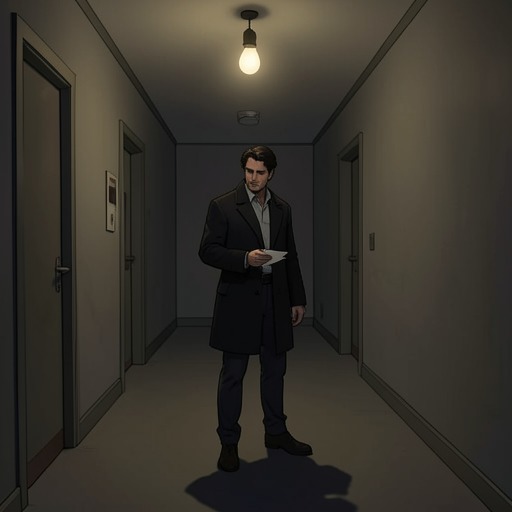
The LuminariesCharlie Frost is a banker in Hokitika whose professional records and practical interventions help expose how gold, land, and legal claims move through the town. He facilitates the sale of Crosbie Wells’s estate, investigates the failing returns of Emery Staines’s Aurora mine, and later helps arrange the distribution of money among people facing legal costs and debt. His role is not that of a detached observer: he sometimes acts on incomplete information, enters conflicts whose stakes he barely understands, and becomes implicated in the transactions he helps explain.
Identity and Background
Frost is identified as a banker, and his work gives him access to the documents through which several strands of the story can be compared. He examines mine shares and quarterly returns, handles the bank’s involvement in the purchase of Wells’s property, and remembers how gold discovered on the estate passed through the institution. His authority rests on records and familiarity with clients’ signatures, rather than on any independent power to settle the disputes those records expose.
His business sits within a broader landscape of contested ownership. The Crown had purchased extensive Poutini Ngāi Tahu territory for three hundred pounds, leaving the iwi only specified areas around the Arahura River and Mawhera. Six years later, the growth of gold mining and the revenues attached to licences and land made the earlier transaction appear to Poutini Ngāi Tahu as a profound injustice. Wells, in turn, paid the Crown fifty pounds for a hundred acres at the eastern end of the Arahura Valley, where he built a cottage and began a timber mill. Frost’s later facilitation of the estate sale belongs to this chain of transactions: the bank handles private property claims on land whose conversion into saleable acreage was already bound up with colonial dispossession.
Records, the Aurora, and Wells’s Fortune
Frost’s investigative initiative begins after Thomas Balfour visits the Reserve Bank. Once Balfour has left, Frost decides to make inquiries of his own. He is holding the share profile for the Aurora, the goldmine owned and operated by the missing prospector Emery Staines, and recalls having seen the name elsewhere. He retrieves the third- and fourth-quarter returns from the previous year and studies the mine’s figures.
Those accounts disclose an abrupt change. During the month after its initial purchase, the Aurora produced nearly one hundred pounds; by August its profits had fallen sharply, and its total for the following quarter was only twelve pounds. Frost recognizes that a weekly return of one pound scarcely covers a mine’s overheads, particularly one with the apparent depth and promise of the Aurora. The record also says that one man alone worked the claim. Frost notes that the worker’s Chinese name implies inexpensive labor, but reasons that the miner would still require a daily wage. The figures lead him toward a question about the mine’s actual operation, rather than providing a complete explanation of its poor reported yield.
Frost’s knowledge also reaches back to the discovery of Wells’s gold. He acknowledges that the fortune found on the estate passed through the bank and through his own hands. This makes him a crucial link between the physical gold and its recorded financial history. At a later inquiry, he confirms that the gold had already been retorted and identifies Quee Long as the Chinese goldsmith who smelted it while working as the sole digger at Staines’s Aurora claim. His testimony connects the estate fortune to the mine’s accounts and to the changing identity of the gold as it is processed and attributed to a claim.
The Estate Sale and the Gathering of Witnesses
Frost helps bring Wells’s estate into Edgar Clinch’s hands. After Alistair Lauderback finds Wells dead and travels to Hokitika, Benjamin Löwenthal learns of the death and infers that the property will soon be sold. Löwenthal alerts Clinch, who wants to invest in land; Clinch then takes a deposit to the bank, where Frost facilitates the purchase. Clinch later describes the purchase as Frost’s suggestion, saying that acquiring land would discourage questions. The transaction therefore serves more than an investment purpose: it offers a way to make the newly acquired property appear ordinary while the circumstances of Wells’s death and hidden wealth remain under scrutiny.
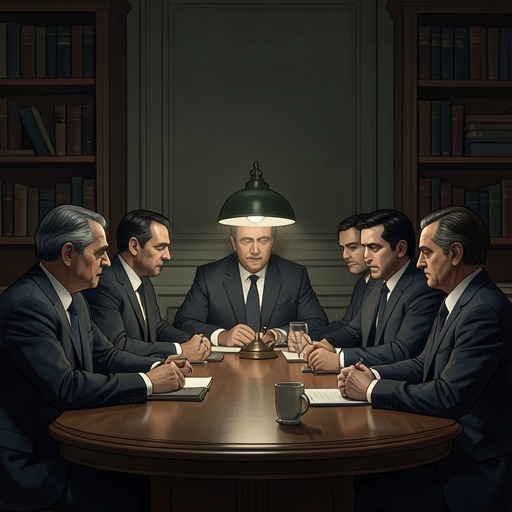
After discovering that a small group of men are to meet at the Crown Hotel, Frost seeks out Löwenthal at the West Coast Times office on Weld Street, just as Löwenthal’s Shabbat is ending. Frost explains that the gathering will pool information about the case. Those expected include men who had been present in Quee Long’s hut, Clinch as purchaser of Wells’s estate, and Joseph Pritchard, whose laudanum was found in Wells’s cottage after his death. Harald Nilssen has vouched for Pritchard, while Frost has vouched for Clinch. These endorsements show Frost helping construct the circle of inquiry, but also make him answerable for the character of a participant whose purchase is part of the mystery.
At a later gathering, Frost watches Lydia Wells as the men look around the room. When attention shifts toward the door, Lydia makes an alteration to her dress; Frost notices that something has changed but cannot tell what she has done. He recognizes the moment as the kind of concealment Pritchard had warned about and resolves not to look away again. The scene makes his attention both useful and fallible: he is alert to possible subterfuge, yet his own glance away leaves him without the fact he needs.
Risk, Suspicion, and the Limits of His Judgment
Frost is drawn into a dangerous confrontation involving Ah Quee and Richard Mannering despite having no personal grievance against the miner. As the craft carries the men closer to a gorge, Frost realizes that he is frightened, unarmed, and unprepared, and that he has placed himself in another man’s dispute without knowing why Quee is its target. He catches the dog between his knees and kneads its wet fur for reassurance, then asks whether they should agree on a plan. His caution arrives after he has already entered the situation; the episode reveals a banker whose willingness to act can outrun his understanding of the danger.
In other encounters, Frost presses for clarification rather than pretending to know more than he does. When Ah Sook mentions knowing a secret about Crosbie Wells, Frost asks what the secret concerns. Later, he reports that Ah Sook connected the matter to Francis Carver. These exchanges make Frost a conduit for fragments of testimony: he carries information into the wider investigation, but the evidence available to him remains partial and dependent on what others choose to disclose.
His relationship with Pritchard is marked by unease. When Pritchard looms close and demands that Frost explain how he can avoid being diverted, Frost responds with discomfort and acknowledges his apprehension of the chemist. Pritchard argues that Staines cannot simply have vanished, treats Anna Wetherell’s account of her opium use as a lie, and points to her plan to summon Staines at a séance. Frost’s position between forceful investigators and uncertain evidence is characteristic: he must listen to confident interpretations without being able to verify every premise himself.
Financial Arrangements and Narrative Significance
Frost’s fullest accounting comes after Justice Kemp rules that Carver’s dividend of two thousand and forty-eight pounds must be honored. The Garrity Group is to be repaid in full for its claim against the Godspeed, with the remainder going to Carver’s widow. Frost then explains that the guilty party must cover legal fees, including those incurred by John Fellowes, as well as Nilssen’s commission, which had been invested in the Seaview gaol-house. Because the magistrate ruled that the commission had been charitably donated, it will not be revoked. Together, these expenses amount to a little more than five hundred pounds.
Frost also proposes that Staines take on Anna’s debt of about one hundred and twenty pounds to Mannering. The gold extracted from Anna’s orange gown is still stored beneath Aubert Gascoigne’s bed; Frost suggests that Mannering be repaid from Staines’s share of the bonanza, leaving Anna with money to live on while Staines is in gaol. He recommends a separate bonus payment to Quee, connecting the miner’s contribution to the settlement of the fortune. In these proposals, Frost treats money not as an abstract total but as a means of allocating immediate obligations among people whose lives have been shaped by the concealed gold.
Finally, Frost admits that Clinch had given him thirty pounds when the fortune first came to light in January. He has spent it and cannot repay even a penny, so he asks to list it as a bank expense, describing it as a loan to be repaid by the time of Staines’s release. The admission complicates his position as the careful custodian of records: he has helped reveal the fortunes and liabilities of others while also disclosing his own compromised account. Across the story, Frost’s ledgers clarify ownership and movement, but his interventions also demonstrate that accounting is never wholly separate from judgment, risk, or personal interest.